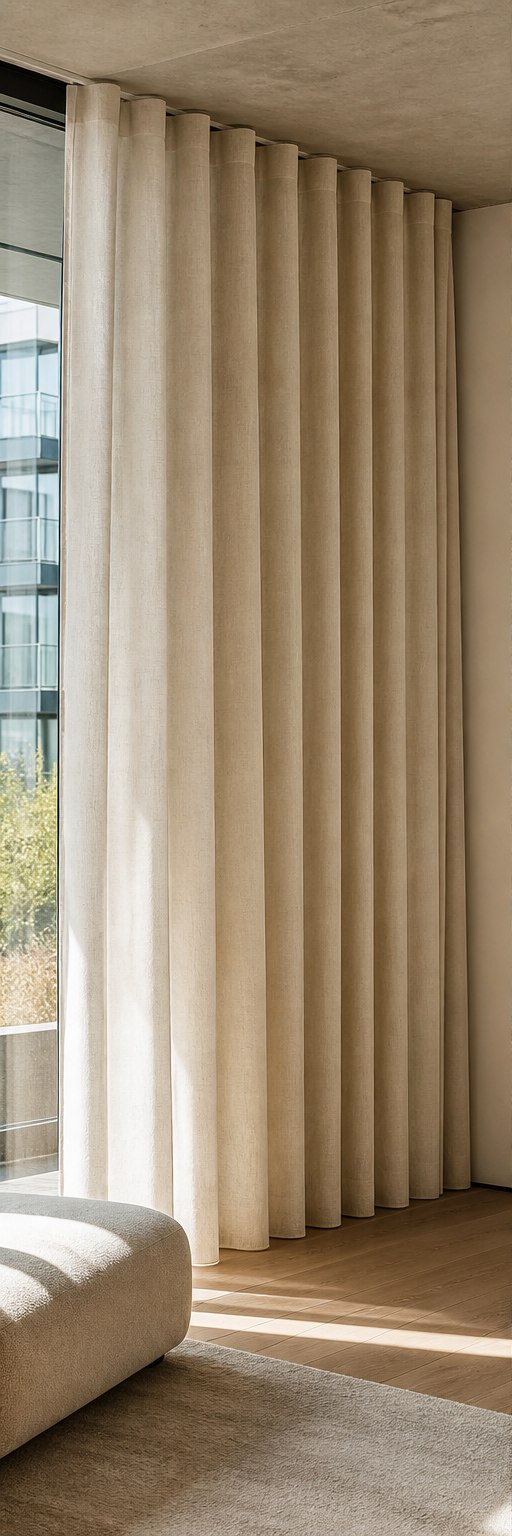
The living room often represents the overall personality of a home. Curtain planning should consider natural light, seating arrangement, wall color, furniture style, and the desired atmosphere. Sheer and outer-curtain combinations can be useful when both daylight and privacy matter.
Curtain planning guide · Curtain Canvas blog
Curtain planning and interior design | Curtain Canvas
A beautifully designed room can have the right furniture, elegant lighting, a balanced color palette, and carefully selected décor. But still feel unfinished. Very often, the missing element is the curtain.
Curtains occupy a large visual area around windows, influence how natural light enters the room, and affect privacy, proportion, texture, and atmosphere. This is why curtain planning and interior design should not be treated as two separate decisions.
Instead of choosing curtains after everything else is completed, thoughtful curtain planning considers the entire interior. From fabric and color to curtain height, layering, hardware, and light control, every decision should work with the room rather than simply cover its windows. In this blog we will understand the relation between curtain planning and interior design.
Interior essentials
What is curtain planning in interior design?
Curtain planning is the process of selecting and designing window treatments according to the visual and practical requirements of a space. It goes beyond deciding whether a fabric looks attractive. When the below factors are considered together, curtains become part of the interior design rather than an isolated decorative product. Proper curtain planning considers:
- Room size and layout
- Window dimensions
- Wall and furniture colors
- Interior design style
- Natural and artificial lighting
- Privacy requirements
- Required light control
- Fabric texture and weight
- Curtain height and width
- Pleat and heading style
- Rod or track selection
- Furniture placement
- Overall mood of the room
Why are curtains important in interior design?
Windows naturally attract attention because they connect indoor spaces with outdoor light and views. Curtains frame these openings, which means their color, proportion, and texture can significantly affect how the entire room feels.
A correctly planned curtain can make an interior appear taller, softer, warmer, more spacious, or more luxurious. An unsuitable curtain can have the opposite effect.
That is why curtain planning has a direct relationship with several major elements of interior design. Here are some important points given below:
1. Curtains influence the color balance of an interior
Color is one of the strongest connections between curtains and interior design.
Your curtain does not necessarily need to be exactly the same color as your sofa, wall, or carpet. In fact, using identical colors everywhere can sometimes make a room look flat.
A better approach is to consider the complete palette.
For example:
- Neutral curtains can soften colorful furniture.
- Dark curtains can add visual depth to light-colored interiors.
- Warm beige or earthy shades can complement wooden furniture.
- Soft grey curtains can work with many modern interiors.
- A carefully selected accent color can connect curtains with cushions, artwork, or décor.
2. Curtain planning controls natural light
Interior design is experienced differently depending on how light enters a room.
A bright living room may benefit from soft-filtering or sheer curtains that allow daylight to enter without leaving the window completely exposed. A bedroom may require stronger light control for greater comfort and privacy.
This is where different curtain solutions become useful.
Sheer curtains help diffuse natural light and create an airy appearance.
Blackout curtains provide stronger light control and are particularly useful for bedrooms, media rooms and spaces exposed to intense sunlight.
Layered curtains combine different levels of light control, allowing homeowners to adjust the room according to the time of day.
3. Curtains affect the visual proportion of a room
Curtain placement can change how we perceive the dimensions of a space.
Installing curtains immediately above the window frame may visually emphasise the actual window size. In contrast, positioning the curtain system higher can create a stronger vertical line and make the room feel taller.
Width also matters.
Curtains that extend beyond the window opening can make the window appear wider while allowing more of the glass area to remain visible when the curtains are open.
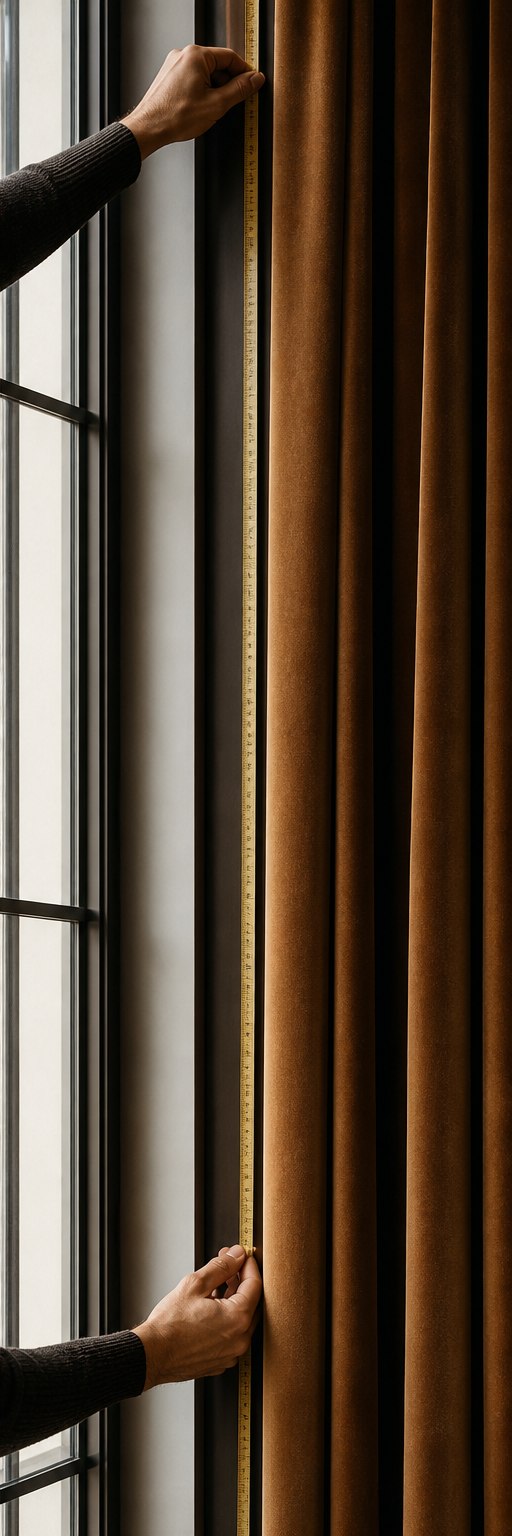
For this reason, accurate curtain measurement and planning are important not only for fitting but also for interior proportion.
4. Curtain fabric adds texture to interior design
Modern interiors are not created with colour alone. Texture adds depth and prevents a room from feeling visually plain. Curtains are one of the easiest ways to introduce texture because fabric naturally provides softness. Different fabrics create different impressions.
A lightweight sheer may make an interior feel open and relaxed, while a heavier textured fabric can create greater visual weight. Smooth fabrics can suit clean contemporary spaces, whereas richer textures may complement more decorative interiors.
When selecting curtain fabric, consider existing materials such as:
- Wooden furniture
- Marble or tiled floors
- Upholstery
- Rugs
- Wallpapers
- Metallic finishes
- Decorative accessories
5. Curtains help establish the mood of a room
Interior design is not only about how a room looks. It is also about how the room feels. The same space can feel completely different depending on its curtains. Soft neutral curtains with natural daylight can produce a calm atmosphere. Darker fabrics can create a more intimate environment. Floor-length curtains can add elegance, while simple light fabrics can support a relaxed contemporary interior.
Therefore, before choosing a curtain, ask:
What should this room feel like?
The answer can guide decisions about fabric, color, curtain style, and layering.
6. Privacy should be included in interior planning
A beautiful interior still needs to function comfortably.
Living rooms facing neighboring buildings, roadside apartments, bedrooms, and ground-floor spaces may require different levels of privacy.
Using only a heavy curtain may solve the privacy problem, but it can also block natural daylight throughout the day.
Layered curtain planning can provide a more flexible solution.
A sheer layer can offer a degree of daytime screening while allowing light into the room, while a heavier outer curtain can provide greater privacy when required.
This demonstrates why functional requirements should be discussed alongside visual design from the beginning.
7. Curtains should work with furniture placement
Furniture and curtains sometimes compete for the same space. A sofa placed tightly against a window, a bed positioned beneath a window, or a cabinet beside the curtain area can affect how freely curtains open and fall. If curtain planning begins only after furniture installation, compromises may become necessary.
During planning, consider:
- How much wall space the curtain needs
- Whether furniture blocks curtain movement
- Where curtains will stack when open
- Whether floor-length curtains are practical
- Whether a track or rod is more suitable
- How the window treatment will relate visually to nearby furniture
8. Curtain style should match the interior concept
There is no single curtain style suitable for every home. A highly decorative curtain arrangement may look impressive in one interior but feel excessive in a minimalist apartment. Similarly, an extremely simple curtain may look incomplete in a richly detailed traditional space.
The curtain design should reflect the interior concept.
Modern interiors: Simple forms, clean lines, understated colors, and well-controlled curtain folds generally work well with modern spaces.
Minimalist interiors: Neutral tones, subtle texture, and simple hardware can maintain the uncluttered character of the room.
Luxury interiors: Full-length curtains, layered treatments, richer textures, and carefully coordinated hardware can help create a more refined appearance.
Classic interiors: More detailed fabric, decorative finishes, and traditional curtain styles may complement furniture and architectural details.
9. Curtain hardware is also part of interior design
Curtain rods, tracks, brackets, and accessories may appear to be minor details, but they influence both appearance and performance.
Visible rods can become part of the decorative scheme, while concealed tracks can create a cleaner architectural finish.
Hardware should also be selected according to curtain weight and dimensions. A beautiful curtain paired with unsuitable hardware may sag, move poorly, or look unfinished.
Curtain planning should therefore include the complete system—not just the fabric.
10. Custom curtains create better interior coordination
Ready-made curtains can work where window dimensions and design requirements are straightforward. However, interiors with specific proportions, large windows, or particular design concepts may benefit from custom-made curtains.
Custom curtain planning allows decisions to be made around the actual room, including:
- Exact curtain dimensions
- Fabric selection
- Colour coordination
- Curtain fullness
- Pleat style
- Length
- Lining
- Layering
- Hardware
- Installation position
Room-by-room curtain planning for better interior design
Different rooms have different functions. Curtain design should respond accordingly. Here are some key examples
Bedrooms generally require greater privacy and more control over outside light. Blackout or layered curtains can be considered depending on sleeping habits, window direction, and overall bedroom design.
Dining spaces often benefit from fabrics that contribute elegance without making the room unnecessarily dark. The curtain should coordinate with dining furniture, lighting fixtures, and nearby living areas, particularly in open-plan homes.
A home office requires controlled daylight so that glare does not interfere with computer screens or work comfort. Curtains should provide adjustable light control while maintaining a clean, professional interior.
Hospitality interiors have to balance aesthetics with practical requirements such as durability, privacy, repeated use, and maintenance. Curtain selection should therefore be integrated with the complete hospitality interior concept.
When should curtain planning begin during an interior project?
Ideally, curtain planning should begin before the interior is completely finished.
You do not necessarily need to finalize every fabric at the beginning. However, discussing curtain requirements early can prevent problems involving installation height, ceiling details, electrical points for motorized systems, furniture placement, and track positioning.
A practical sequence can be:
- Understand the room layout.
- Finalize the overall interior direction.
- Review window dimensions and sunlight.
- Identify privacy and light-control needs.
- Select the curtain style and fabric direction.
- Determine rod or track requirements.
- Take final measurements.
- Complete tailoring.
- Install and inspect the curtains.
Common curtain planning mistakes that can affect interior design
Even premium fabric may fail to create the desired result if the planning is incorrect. Some common mistakes include:
A beautiful fabric may not provide the required light control, privacy, or curtain fall.
Curtains selected separately from furniture, walls and flooring can feel disconnected from the interior.
Curtains that are too short, narrow or poorly positioned can affect the visual balance of the entire wall.
Curtains should be selected according to how much sunlight enters the room and when it enters.
Rod and track decisions affect both installation and final appearance.
The bedroom, living room, office, and dining area do not necessarily need the same curtain solution.
Interior design-focused curtain planning at Curtain Canvas
Curtain Canvas treats curtains as an essential part of your interior design, not just a window covering. We consider your room’s layout, natural light, privacy needs, and overall décor before planning the right curtain solution. From fabric selection to finishing details, every element is planned to complement your space.
- Space-based planning: Curtain style and size are selected according to your room layout, window type, and interior design.
- Fabric & color selection: We help choose fabrics, colors, and textures that match your furniture, walls, and overall décor.
- Light & privacy control: Curtain layers, lining, and fabric density are planned based on your preferred daylight and privacy levels.
- Style & finishing: Pleats, curtain length, rods, tracks, and other details are coordinated for a polished appearance.
- Complete curtain solution: From measurement and design planning to installation, every step is considered as part of the overall interior.
Common questions
FAQs about curtain planning and interior design
Not necessarily. Curtains can complement the wall color rather than match it exactly. The best choice depends on the furniture, flooring, lighting, and overall color palette of the room.
Curtain planning should ideally begin while the interior is being developed. Final fabric selection can happen later, but considering curtains early helps coordinate color, measurements, furniture placement, and installation.
Light and neutral colors can often create a more open visual effect, particularly when combined with good natural light. However, curtain height, width, and installation position also influence how spacious a room appears.
Floor-length curtains can create strong vertical lines and a more complete appearance in many interiors. However, the ideal length depends on the window, room function, furniture placement, and design concept.
Yes. Sheer curtains soften incoming daylight and can add visual lightness to an interior. They are also commonly combined with heavier curtains when greater privacy or light control is required.
Custom curtains can be planned according to actual window measurements, room proportions, fabric preferences, curtain style and functional needs. This provides greater control over how the finished curtain fits the interior.